
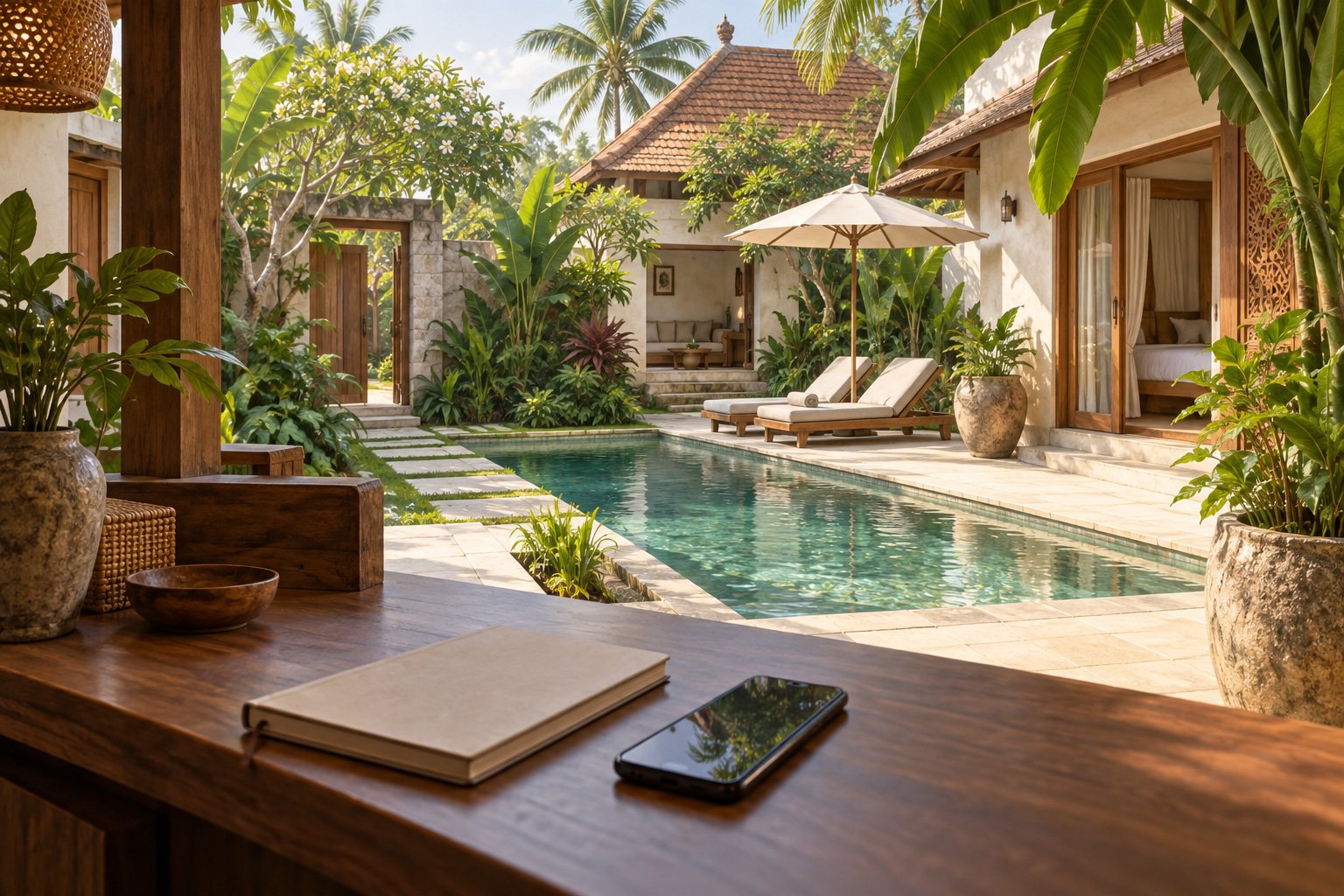
A practical guide for hotel and villa owners who want to attract the right guests and make booking direct feel easy.
A beautiful property deserves to be seen. But being seen is only the beginning.
A traveller might discover your villa on Instagram, compare it on a booking platform, read reviews, and finally visit your website. At each stage, they are deciding whether your property feels right and whether they feel comfortable making a reservation.
Growing direct bookings means making that journey clearer and more reassuring. These ten steps offer a practical place to begin.
1. Get clear about the guests you want to welcome
Before changing your website or increasing your advertising budget, look at the guests who already choose your property.
Where do they come from? What brings them to the destination? How long do they stay? What do they appreciate most, and what questions do they ask before booking?
A family choosing a villa may need clear bedroom arrangements, pool information, and space to spend time together. A couple planning a quiet break may care more about privacy and the atmosphere of the surroundings.
Use those differences to shape your message. Specific, accurate details give people something useful to consider. “Two bedrooms opening onto a private garden” tells a guest more than “an unforgettable escape.”
2. Make your property easier to find through search
Start with the information travellers need: your property name, location, accommodation types, facilities, and booking details. Keep it accurate wherever your property appears.
For eligible businesses, maintain a complete Google Business Profile with current photographs, contact information, and the correct website link. Google explains that local visibility depends partly on relevance, distance, and prominence, so no profile update can guarantee first place.
Villa owners should check eligibility carefully. Google lists individual vacation homes among businesses that are not eligible for a Business Profile; an eligible accommodation business or management office is a different case.
Also ask your booking-system provider whether your property qualifies for Google’s hotel free booking links. Google does not charge for these clicks, although provider charges may still apply.
3. Show guests what the stay actually feels like
Good photography helps people understand the property as well as appreciate it.
Show the bedrooms, bathrooms, shared areas, pool, entrance, and surroundings. Include practical views that explain how spaces connect, especially when guests are booking an entire villa.
Then add the details that give the stay its character: morning light on the terrace, breakfast in the garden, or a comfortable corner for reading.
Keep everything truthful. Avoid edits that make rooms look substantially larger or hide permanent limitations. Guests should arrive and recognise the place they chose.
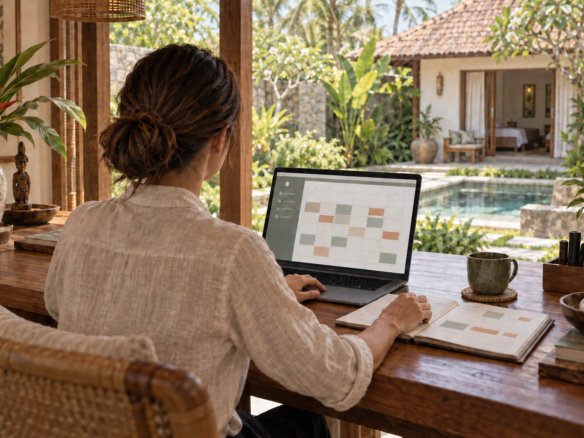
Use genuine property photographs for selling accommodation. Concept illustrations, like those accompanying this article, serve a different editorial purpose.
4. Make booking on a phone straightforward
Open your website on your phone and follow the journey as a first-time guest.
Can you find availability easily? Are room differences clear? Does the booking page explain the full price, payment requirements, and cancellation terms before asking for a commitment?
A visible “Check Availability” button is a useful start. The rest of the process needs to feel equally clear, including the transition to your booking system.
Offer a convenient way to ask questions, such as WhatsApp or a short enquiry form. For larger villas and complicated stays, a helpful conversation may be part of the booking journey. Make sure someone can respond accurately and follow through.
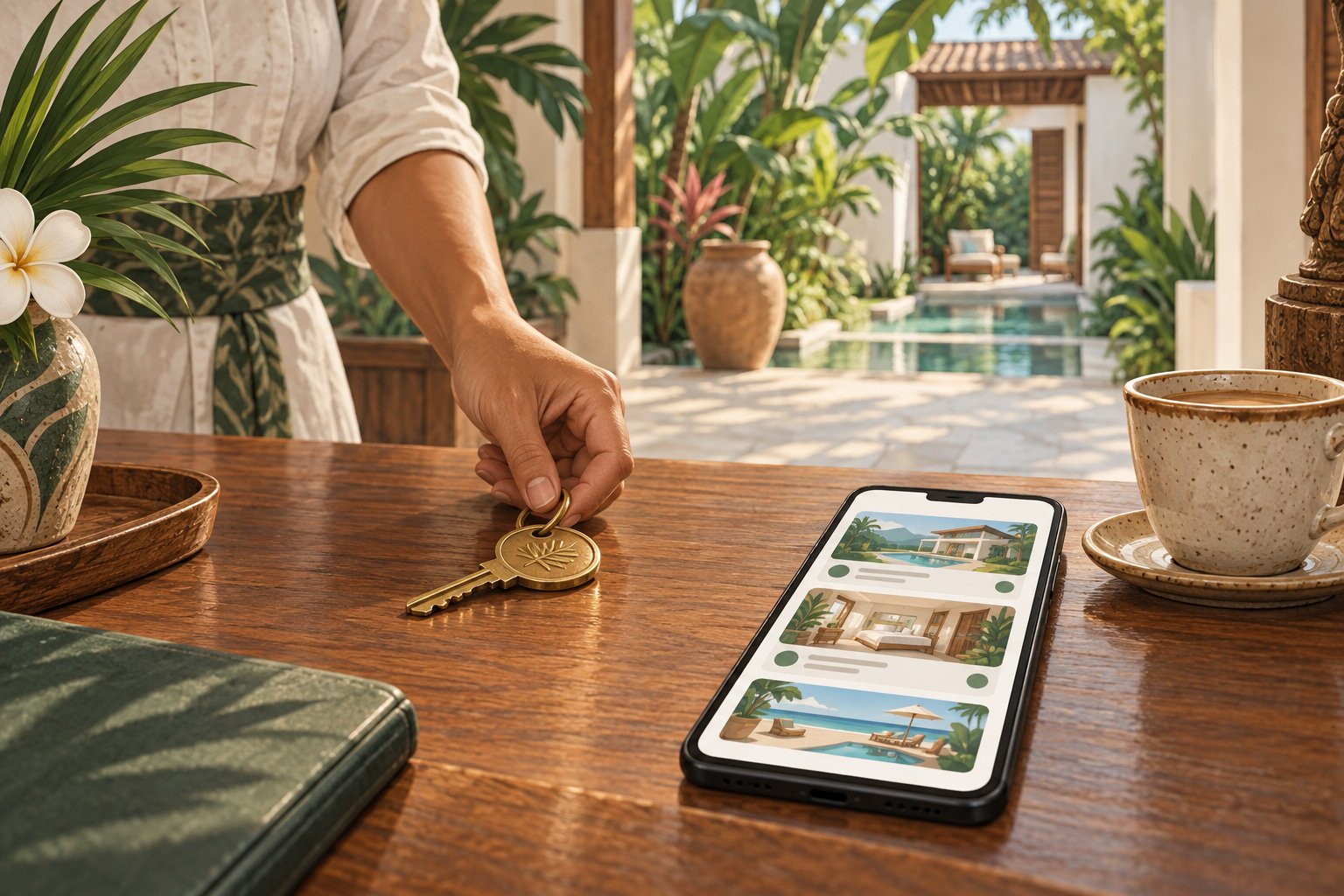
5. Give guests a clear reason to book directly
A direct-booking benefit should be easy to understand and realistic to deliver.
Depending on your property, that might mean an included breakfast, a useful longer-stay package, or more personal help arranging the visit. If a benefit depends on availability, explain that upfront.
Before introducing an offer, calculate its cost. A complimentary transfer may sound attractive but make little commercial sense for a short, low-value stay.
Compare the complete offer across channels, including taxes, meals, payment conditions, and cancellation terms. Guests need to see the value without doing detective work. Make sure any channel-specific offer also fits your distribution agreements.
6. Build trust through genuine reviews
Reviews help guests understand what a stay is like beyond the property description.
Invite honest feedback after the visit and respond thoughtfully. Thank guests for specific observations. When something went wrong, acknowledge the concern and explain the practical response where appropriate.
Look for recurring themes. If several guests struggle to find the entrance, improve the arrival directions. If they repeatedly praise the staff’s local recommendations, explain that service more clearly on your website.
Google also notes that review volume and positive ratings can help local ranking. However, the operational value of feedback extends beyond search visibility.
7. Give each booking channel a clear role
Online travel agencies, or OTAs, can introduce your property to travellers who do not already know it. Your website gives those researching your property a direct way to learn more and book.
Keep photographs, accommodation descriptions, and availability consistent. Check that differences in rates reflect genuine differences in inclusions or conditions.
Review what each channel delivers after costs and cancellations. A channel with higher fees may still bring valuable stays during quieter periods. Equally, direct reservations may carry advertising, payment, and booking-system costs.
8. Give your marketing a specific purpose
Choose a clear audience, offer, and destination page for each campaign.
A family-villa campaign should lead to information about bedrooms, shared spaces, and relevant facilities. A longer-stay offer should explain the conditions and what makes an extended visit comfortable.
Use social content to answer real questions and show useful details. A short property walkthrough or an honest neighbourhood guide gives potential guests something to work with.
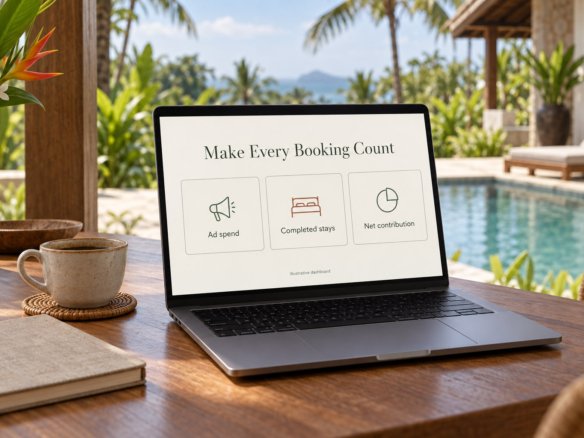
Begin paid campaigns with a controlled budget and reliable booking tracking. Likes and clicks can reveal interest, but spending decisions should eventually connect to completed stays and their value.
9. Keep the relationship warm after checkout
A guest relationship can continue after the stay, provided the communication remains welcome.
Send useful messages to guests who have agreed to receive marketing. Share a relevant seasonal offer, a meaningful property update, or a reason to consider returning. Make it easy to opt out.
For guests unlikely to revisit soon, a good experience may still lead to a recommendation. Helpful service, clear communication, and thoughtful follow-up give that relationship a stronger foundation.
Choose a rhythm your team can maintain. A relevant message occasionally is more useful than frequent communication with little to say.
10. Measure results and improve one thing at a time
Start with a small set of measures your team can use consistently:
- Website reservations and enquiries.
- Website booking conversion: completed online reservations divided by website sessions.
- Direct share of stayed room nights.
- Cancellation rates by channel.
- Revenue remaining after acquisition and channel costs.
For a fuller contribution view, also account for the variable costs of delivering the stay and any included benefits.
If your booking system sits on a separate website, check that tracking follows the guest through to confirmation. Otherwise, your reports may lose the connection between the visit and the reservation.
Compare similar periods and record changes to rates, offers, and availability. When booking volumes are small, give tests enough time before drawing conclusions.
The strongest place to begin is wherever guests face the greatest obstacle. That may be unclear photography, missing information, a difficult payment process, or an offer that does not feel competitive.
Make that part better, measure the result, and build from there. Over time, a clearer and more dependable guest journey gives your property a stronger foundation for visibility, direct bookings, and healthy revenue.
Want help deciding where to start? Book a FREE Consultation with MAJA Experience to discuss your property’s visibility and direct-booking journey.

Join The Discussion